Electric Bikes and Knee Pain: Is Pedal Assist Safe for Your Joints?
Nine months out from a total knee replacement, most people are not thinking about riding bicycles. They are thinking about whether they can trust their joint again on stairs, on uneven sidewalks, or standing up from a low chair. So when a physical therapist says you are finally cleared for low-impact cardio, you want to know if you can actually do this without wrecking the progress you have made.
That is exactly why so many riders ask us about using an electric bike for knee pain. An e-bike is not a magic fix. However, there is a real mechanical reason pedal-assist cycling shows up constantly in knee recovery conversations. It has everything to do with what happens to your joint when a silent electric motor takes over the heaviest parts of the workload.
Medical Disclaimer
We're bicycle experts, not doctors! Nothing in this article should be read as medical advice. If you are recovering from surgery or managing a chronic knee condition, your own care team's guidance always comes first. This guide is here to explain the mechanics of e-bikes so you can have an informed conversation with your physical therapist.
Can You Ride an Electric Bike After Knee Surgery?
The short answer is often yes. Once your surgeon or physical therapist has specifically cleared you for cycling, you can absolutely get back in the saddle. However, the timeline and your approach matter much more than a simple yes or no.
Cycling is one of the exercises orthopedic teams reach for early in knee rehab because it moves the joint through a controlled range of motion without the jarring impact of walking or running. An electric bike uses that exact same healthy motion. The game-changing difference is how much muscular effort you need to produce to keep the pedals turning.
Why Pedal-Assist Changes the Equation
On a standard bicycle, your legs are the sole power source. If your knee is weak, swollen, or still relearning how to bear a load, you are forced to push through discomfort just to keep moving. That is exactly the pain pattern physical therapists try to prevent.
Pedal assist adds motor power in proportion to the effort you are already putting in. You still have to pedal, but the motor absorbs the brutal resistance on hills, through headwinds, and when starting from a dead stop. You can complete a full ride at a relaxed intensity your knee can actually tolerate.
A Realistic Recovery Timeline
Every surgeon has a different protocol, but here is a general framework to discuss with your care team.
- Weeks 1 to 6 (Not Yet): Early recovery is about swelling control and regaining basic range of motion. Outdoor riding of any kind is typically off the table while you rebuild your balance.
- Months 2 to 4 (Cleared for Cardio): This is where many patients get the green light for low-impact cardio. You will likely start on a stationary bike indoors before moving to a flat, predictable outdoor path.
- Month 6 and Beyond (Building Consistency): By six months, many riders shift from testing their tolerance to building a healthy habit. Short, consistent rides are the best way to maintain long-term joint health.
What to Look for in a Recovery-Friendly E-Bike
If your physical therapist has cleared you to ride, you need a bike that will not fight you. Here are the three most important features to look for when shopping at Bicycle Warehouse.
1. Step-Through Frames
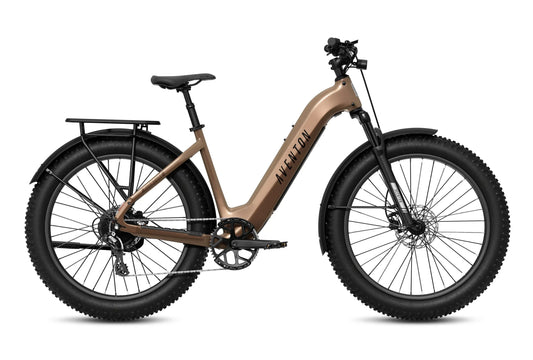
Swinging a leg over a traditional bike frame asks a lot of a cautious knee. A step-through frame dips incredibly low to the ground. This design lets you step straight through the bike frame to get on and off, protecting your knee from awkward twisting.
2. Torque Sensors
You want an e-bike with a torque sensor rather than just a basic cadence sensor. A torque sensor measures exactly how hard you are pushing on the pedals and delivers power smoothly in proportion to your effort. This prevents the bike from surging or jerking unexpectedly, which is critical for protecting sensitive joints.
3. An Upright Riding Position
Look for cruiser-style commuter bikes that keep you sitting fully upright. This takes the weight off your wrists and allows your knee to relax through the pedal stroke rather than being crunched up in a hunched racing posture.
Ready to Test Ride?
We proudly carry the best step-through, torque-sensor equipped e-bikes in the industry from top brands like Aventon, Specialized, and Cannondale. Our team is here to help you find the absolute perfect fit for your recovery journey.
Stop by your local Bicycle Warehouse in San Diego, Pacific Beach, Chula Vista, San Marcos, or Temecula. We will set you up in a safe, flat parking lot so you can feel the pedal-assist magic for yourself and get back to enjoying the ride!