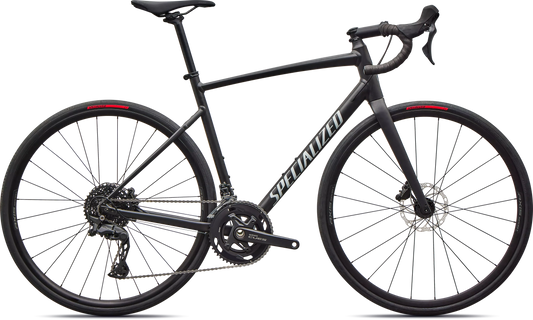
Aluminum has long been celebrated as the workhorse material of the cycling industry. It is lightweight, naturally stiff, rust-proof, and significantly more affordable to manufacture than carbon fiber. Yet for decades, aluminum frames suffered from a reputation for harsh, bone-rattling ride quality and clunky, overbuilt weld joints. Specialized set out to challenge that paradigm with D'Aluisio Smartweld technology.
Commonly abbreviated as DSW, D'Aluisio Smartweld is an advanced manufacturing methodology that reimagines how aluminum tubes are formed, aligned, and welded together. By moving the structural welds away from high-stress junctions, Specialized engineers lightweight alloy frames that rival the compliance, handling, and scale-tipping weights of modern composite bikes.
The Origins of D'Aluisio Smartweld
The concept was born when Specialized engineering innovator Chris D'Aluisio set out to solve an aesthetic issue. He wanted to create seamless, smooth-looking weld transitions at the head tube junction without adding heavy bond fillers or grinding down structural metal.
To evaluate the structural integrity of his new joint prototypes, D'Aluisio teamed up with Chuck Teixeira, one of the foremost pioneers in bicycle aluminum fabrication. When the team strapped the first test frames to the hydraulic fatigue-testing rig, the results were startling. Instead of simply matching standard aluminum durability, the Smartweld frames lasted two to three times longer in continuous stress cycles to failure. What began as a styling experiment quickly turned into a breakthrough in structural frame performance.
How Traditional Aluminum Welding Falls Short
To appreciate why Smartweld is revolutionary, it helps to look at how conventional aluminum bicycle frames are constructed. Traditionally, round or ovalized aluminum tubes are mitered, meaning the ends are ground into curved profiles so they sit flush against the round surface of another tube. A welder then joins the pieces by hand, laying a bead directly at the seam.
This traditional method introduces several critical engineering compromises:
- Welding at the Peak Stress Zone: In a bike frame, the area where the top tube and down tube meet the head tube sustains tremendous torsional and bending force every time you sprint, corner hard, or hit the brakes. Standard construction places the weld directly on that high-stress junction.
- The Heat-Affected Zone (HAZ): The intense thermal energy required to weld aluminum temporarily softens the crystalline structure of the metal surrounding the bead. Placing a heat-softened zone precisely at the point of maximum mechanical stress makes the area vulnerable to fatigue failure over time.
- Overbuilt, Rigid Tubing: To prevent cracking around traditional welds, manufacturers must use thick-walled, heavy aluminum tubing throughout the main triangle. This excess material adds weight and creates the harsh, unyielding ride quality riders historically associated with older alloy bikes.

The Smartweld Solution: Moving the Weld
Smartweld completely reengineers the geometry of the tube junctions. Specialized uses precision hydroforming to shape both the head tube and the intersecting ends of the top tube and down tube. Instead of raw, cut tube ends mating flat against a flat cylinder, the tubes are hydroformed with rolled, inward-curving lips that interlock like pieces of a puzzle.
This design creates three distinct structural advantages:
- Relocated Weld Seams: The hydroformed flanges shift the weld bead several millimeters away from the sharp angle of the joint. By moving the weld out of the primary stress axis, the joint resists cyclic bending fatigue significantly better.
- Engineered Welding Valleys: When the hydroformed pieces are pressed together, their rolled edges form a consistent, uniform channel. Instead of relying on a welder to manually bridge uneven gaps between mitered tubes, the weld bead sits inside a guided valley, ensuring 100 percent full-penetration welds every time.
- Targeted Wall Thickness: Because the joint itself is mechanically interlocking and stable, the center sections of the top tube and down tube can be engineered with ultra-thin walls. This process, known as variable-wall butting, cuts substantial weight while reintroducing natural vertical compliance into the frame.

Advanced Hydroforming: The Backbone of DSW
Smartweld cannot exist without high-pressure hydroforming. In this process, raw aluminum tubes are placed inside custom steel dies and pumped full of pressurized hydraulic fluid at thousands of pounds per square inch. The fluid forces the aluminum to expand outward to match the exact contours of the internal mold.
Hydroforming allows engineers to vary tube shapes along their entire length. A down tube can start as an oversized, flattened oval at the bottom bracket to resist pedaling deflection, transition into an aerodynamic profile through the center, and taper into a dished socket where it mates with the head tube. This degree of dimensional precision is impossible to achieve with standard mechanical tube drawing.
Traditional Aluminum vs. D'Aluisio Smartweld
| Feature | Standard Mitered Aluminum | Specialized D'Aluisio Smartweld |
|---|---|---|
| Weld Location | Directly at the high-stress tube junction | Relocated away from primary stress points |
| Joint Interface | Flat mitered joints with variable gaps | Interlocking hydroformed valleys with precise fitment |
| Fatigue Life | Standard industry benchmarks | Up to 200 to 300 percent longer cycle life in testing |
| Tube Wall Thickness | Thicker throughout to survive weld heat | Ultra-thin center walls with reinforced joint ends |
| Ride Characteristics | Stiff, prone to transmitting road chatter | Compliant, responsive, and lively road/trail feel |
Where You Experience Smartweld on the Road and Trail
Specialized incorporates D'Aluisio Smartweld across several key performance models, proving that riders do not have to spend carbon fiber money to get race-ready performance:
- Specialized Chisel (Cross-Country Mountain Bike): The Chisel hardtail is one of the lightest, most capable alloy XC platforms ever produced. Thanks to Smartweld, the Chisel frame tips the scales around 1,400 grams, rivaling high-end carbon hardtails while offering supple seatstay flex that takes the bite out of rough singletrack.
- Specialized Allez Sprint (Crit & Road Racing): Famous on the criterium circuit, the Allez Sprint uses Smartweld at both the head tube and the bottom bracket shell. Hydroforming the bottom bracket and down tube into a unified, one-piece structure creates explosive power transfer during out-of-the-saddle sprints.
- Specialized Diverge E5 (Gravel & Adventure): Built for rough gravel fire roads and bikepacking trips, the Diverge E5 pairs DSW strength with confident tire clearance and progressive handling that stays stable over loose surfaces.
Frequently Asked Questions About Smartweld Technology
Is a Smartweld aluminum frame as light as carbon fiber?
A D'Aluisio Smartweld frame comes remarkably close to the weight of mid-tier carbon fiber frames, often within 150 to 250 grams. While top-tier high-modulus carbon remains the absolute lightest option on the market, Smartweld offers a vast majority of the weight savings and stiffness benefits at a fraction of the cost.
Does Smartweld make aluminum less harsh to ride?
Yes. Old-school aluminum frames earned a reputation for being overly stiff because designers had to use thick, heavy tubing throughout the whole bike to prevent welds from cracking. Because Smartweld removes the stress from the weld zone, designers can use much thinner, hydroformed tubing in non-welded areas, allowing the frame to flex vertically and absorb trail chatter naturally.
Can a Smartweld frame be repaired if damaged?
Like all high-end hydroformed aluminum frames, repairing severe crash damage or crushed tubes is generally not cost-effective or safe due to the heat-treated nature of the alloy. However, aluminum is naturally resilient to direct rock strikes and day-to-day scrapes that might crack or delaminate a carbon fiber frame.
Why do Smartweld joints have visible ridges near the head tube?
Those distinct ridges are the signature of the technology. They mark the raised valley where the hydroformed tube meets the head tube, showing exactly where the weld was relocated away from the high-stress junction to ensure maximum fatigue strength.
Experience the Ride Quality of Smartweld
Whether you want to tear up cross-country trails on a Specialized Chisel or sprint through road miles on an Allez, our team is here to help you select the right setup. Explore our full lineup of Specialized alloy bikes online with pro-built delivery straight to your door.
Explore the Bike Collection